By the time it’s obvious, it’s already working · subscribe
Real Crime Archives

By the time it’s obvious, it’s already working.

Predators don’t only arrive as strangers. Often they’re already close — a partner, a relative, a “helper,” a friend of a friend. They work the same patterns the book maps: selection, approach, isolation, control. The early signs are small. People miss them because they look like mood, privacy, or ordinary life. The list (and the field guide behind it) is how you learn those patterns — and how to spot them around you before the story hardens.

After you join: short takeaways and safety tips from the cases — how predators select, approach, isolate, and take control, and how to spot those moves around you. Occasional. Practical. Unsubscribe anytime.

You’ll get takeaways and safety tips from the archive — not a sales dump. No spam.

Patterns they use Signals close to home Even people close
I · Close to home

They don’t have to be far away

Same operating patterns — selection, approach, isolation, control — whether the person is a stranger or someone already trusted. Here’s what people often miss.

When it’s someone you already trust

A partner, sibling, adult child, or “helper” can run the same playbook as a stranger — only the approach looks like love or duty. Fewer shared meals. Secrets framed as privacy. Questions from family get treated as interference.

The little signals people explain away

Shorter calls. New passwords. A story that can’t be checked. Money handled “for their own good.” Each one feels small. Together they mean access is being rearranged — and by the time it’s obvious, the pattern is already working.

How to spot it around you

The list and the book train the same skill: name the pattern early, without turning care into panic. You don’t need to accuse. You need language for what’s changing — and a way to keep a door open before isolation closes it.

This is the core of How Predators Actually Operate: not only how they work — how the people nearby can still see it.

II · The guide

What's inside the field guide

The deeper map — same patterns as the list, fully laid out.

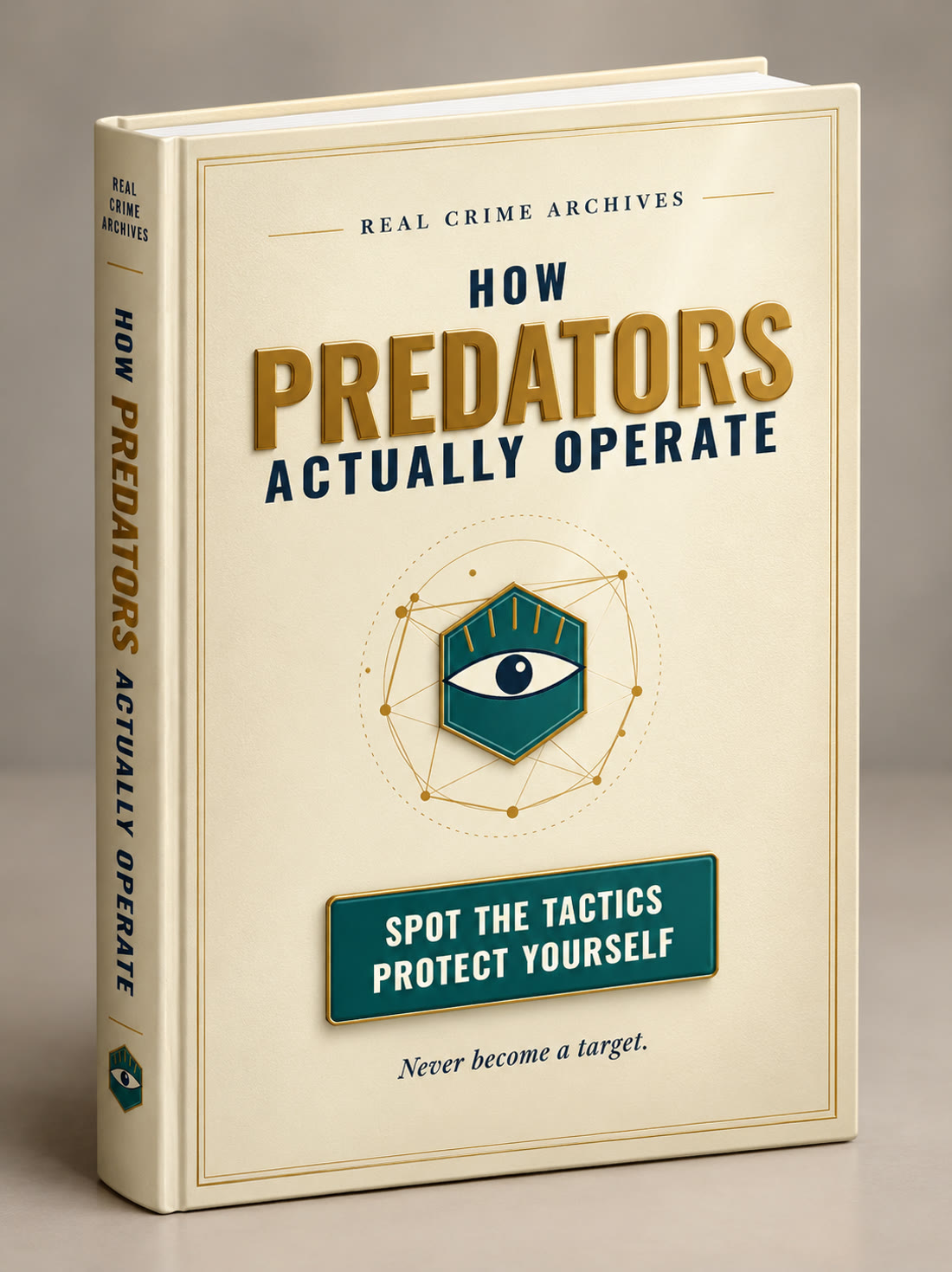
How Predators Actually Operate

  • How targets are chosen before anything "happens"
  • Approach patterns: charm, authority, crisis, familiarity
  • Isolation tactics that cut people off from help
  • Red flags from real cases, not Hollywood scripts
  • Practical closings you can use this week
  • How to warn family without creating panic

Who it's for

  • Anyone who needs to stay protected
  • Parents, partners, and people who sense something is off
  • True-crime viewers who want usable takeaways
  • Archive subscribers who want the pattern, not just the story
III · The map

Six chapters

Selection to protection — a field guide you can finish and keep.

01

Selection

Availability, isolation, and low resistance — before the public story starts.

02

Approach

Charm, authority, crisis help, and familiarity.

03

Isolation

How trust is used to cut someone off from help.

04

Control

The climb from "odd" to dangerous.

05

Closing openings

Home, work, dating, and online — without living scared.

06

Protecting others

How to warn and support when someone you love is being pulled in.

III · Sample

Read two pages

Enough to feel the voice — not the whole chapter. The rest is in the guide.

Sample · 12
Chapter 02 · Approach

The first ask is almost never the real ask.

Predators rarely open with threat. They open with a role the target already knows how to answer: the helpful stranger, the authority figure, the friend of a friend, the person in a hurry who needs one small favor.

That first favor is a compliance test — small enough to feel rude to refuse, large enough to move someone one step off their usual path.

If you only keep one line: politeness is not a safety strategy.

How Predators Actually Operate

Sample · 47
Chapter 03 · Isolation

How many independent humans can still reach you?

Approach gets a predator close. Isolation makes interruption scarce. Isolation is not only a locked room — it is any engineered condition where witnesses, money, or a believable exit collapse.

Privacy is chosen and reversible. Isolation is punished when reversed. If asking “Can I tell my friend?” produces rage, fear, or a loyalty test, you are not looking at privacy.

You are looking at isolation work — and that is the hinge the rest of the guide turns on.

How Predators Actually Operate

Two pages. The full field guide maps selection through protection — with language you can use this week.

Grab a copy · $24.99

Want more of this voice — free?

You’ll get short takeaways and safety tips — patterns from real cases, written to use. No spam.

IV · Archive

From the archive

Cases that shape the book's lens. Full files on YouTube.

V · From readers

What reading the guide actually changed.

Not a pitch about who it’s “for.” Notes from people who used specific chapters — and what shifted afterward.

Reader results

What reading the guide actually changed.

Three readers. Specific pages. What they did after.

I’d been seeing a man in the area at certain times at night. His face didn’t ring a bell, so I kept ignoring it. The book pushed the opposite — alert the neighbors, put more eyes on the pattern instead of shrugging it off. One of our head neighbors asked him what he was looking for. We haven’t seen him since. God knows what he was plotting.
Marcus T.
My boss asked me to come see him somewhere private “for a job.” I didn’t like it. I asked why it had to stay private — he said it was sensitive and better kept off the clock. After the isolation chapter, that landed differently: cutting you away from witnesses isn’t a favor, it’s the pattern. I kept the meeting at the office during work hours and told a coworker where I’d be. He dropped the private ask. Reading that section didn’t make me paranoid — it showed me I wasn’t wrong for refusing to go alone.
Aisha K.
The isolation chapter didn’t tell me how to confront anyone. It named the pattern I was already living with: shorter calls, visits that needed permission, concern labeled “drama.” Reading that section made me stop arguing about privacy and start tracking what had actually changed. That alone shifted how I showed up the next week.
Diane M.

Subscribe

Join for takeaways and safety tips from the archive — selection, approach, isolation, control — then decide on the book.

VI · About

About Real Crime Archives

Real Crime Archives
@RealCrimeArchivesTv

Welcome to Real Crime Archives, where we honor the resilience of victims through respectful, truthful, and meticulously researched storytelling — dedicated to the dignity and justice they deserve, and to ensuring their stories are never forgotten.

The field guide How Predators Actually Operate turns that archive into practical pattern recognition: how predators choose, approach, isolate, and control — so parents, partners, and ordinary people can close openings before harm.

Watch the cases on YouTube. Keep the patterns in the book.

The list

See it before someone you love does

Exactly what you get: short takeaways and safety tips from the cases — how predators operate, and how to spot the pattern around you (even when it’s someone close). Occasional notes. No spam.

Coming from YouTube? The list sends takeaways and safety tips from the cases. The field guide is the deeper map when you want it.

$39.99$24.99

Notes first · Deeper guide when you’re ready

VI · Why it works

Built from the archive

Patterns from the archive — written to use, not to scare.

Case-first

Patterns drawn from documented cases covered on Real Crime Archives — not vibes or shock copy.

Short on purpose

A field guide you can finish in one sitting, then keep as a reference.

Protection-first

Everyone needs to stay protected. The book is for daily life, not just true-crime fandom.

VII · Get the book

How Predators Actually Operate

Digital PDF · Instant download · One-time purchase · No subscription

How Predators Actually Operate hardcover edition
$39.99$24.99 one-time

Digital PDF · Instant download · One-time purchase · No subscription

7-Day Money-Back Guarantee

VIII · FAQ

Common questions

What format is the book?

Digital PDF. Instant download after checkout. Read on phone, tablet, or computer. One-time purchase — no subscription. Once you have the file, it's yours.

Is this only for true-crime fans?

No. The cases come from true crime, but the point is protection. Everyone needs to stay protected — at home, at work, online, and around the people they love.

How is this different from the YouTube videos?

Videos walk a single case. The book maps patterns across cases: selection, approach, isolation, control, and how to close openings.

Will this make me paranoid?

No. Clearer pattern recognition and practical boundaries — not fear of every stranger.

Can I pay with a card?

Yes. Click Get the book to check out securely on Selfany (cards and other methods by location).

How do I get the book?

Click Get the book — you’ll check out on Selfany and get the PDF after payment. Archive notes are under Join the list — email only.

What’s your refund policy?

7-Day Money-Back Guarantee. If the guide isn’t right for you, email us within seven days and we’ll refund you in full.